Key Takeaways
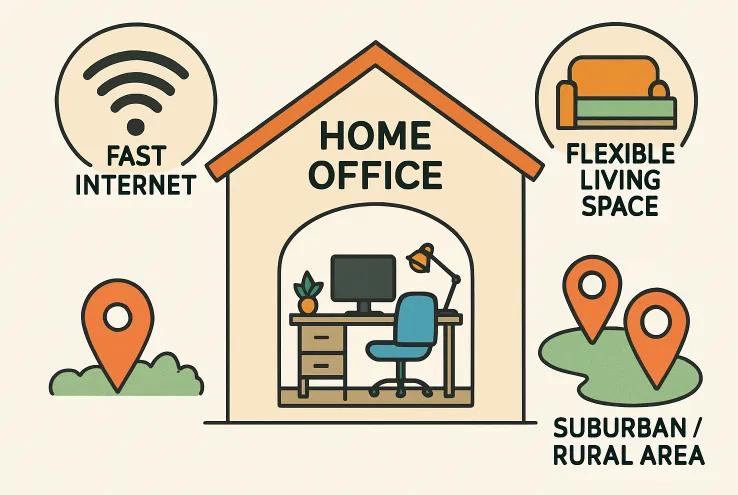
- Remote work has led to increased migration to suburban and rural areas.
- Homebuyers now prioritize dedicated home office spaces.
- Access to high-speed internet has become a critical factor in home selection.
- Flexible and spacious floor plans are in higher demand.
- Proximity to urban centers is less critical than before.
Table of Contents
- Migration to Suburbs and Rural Areas
- Demand for Home Offices
- Importance of High-Speed Internet
- Preference for Flexible Floor Plans
- Reduced Emphasis on Urban Proximity
The growth of remote work opportunities is creating a profound shift in how people approach buying homes. Many homebuyers are rethinking their priorities, focusing not only on price and location but also on features that align with a work-from-home lifestyle. For anyone exploring homes for sale in Chicago, IL, or in any dynamic housing market, understanding these changing trends can help ensure your next purchase matches your evolving needs.
Today’s buyers are no longer bound to city centers or specific neighborhoods close to offices. Remote work has enabled families and individuals to expand their search, leading to a rise in suburban and rural home purchases and a growing emphasis on home functionality, adaptability, and connectivity. This most significant aspect of thinking isn’t just a temporary reaction; it’s expected to influence housing markets for years to come.
The demand for dedicated workspaces, reliable technology infrastructure, and flexible layouts has accelerated. As more companies embrace hybrid or fully remote models, buyers are looking for homes that can double as offices and support their long-term personal and professional goals. With so many changes underway, agents and mortgage lenders are also evolving their services to guide buyers in this new environment better.
Beyond traditional square footage and curb appeal, priorities like access to fast internet, additional office space, and convenient outdoor spaces often top the modern checklist. Recognizing these preferences is essential for anyone wishing to make a wise investment or find a home that truly works for their lifestyle.
Migration to Suburbs and Rural Areas
The ability to work from anywhere is enabling many people to leave crowded urban cores and discover new possibilities outside city limits. As a result, migration to the suburbs and even rural communities is on the rise. In 2024, over half of remote workers opted for suburban living, seeking the benefits of larger lots, more privacy, and improved affordability. Rural areas also became attractive, especially to those seeking a quieter lifestyle or space for hobbies like gardening and home-based businesses. According to recent CNBC analyses, this migration wave is changing the demographics and housing market dynamics of smaller communities across the country.
Demand for Home Offices
One of the biggest shifts emerging from remote work trends is the preference for homes that provide dedicated or flexible office space. Homebuyers increasingly prioritize properties with extra bedrooms, bonus rooms, or adaptable nooks that serve as productive work environments. In fact, about 70 percent of buyers now favor homes with clearly defined office space for video calls, focused tasks, and work-life balance. Features like soundproofing or built-in bookshelves are also gaining appeal, as people aim to customize a distraction-free office within their own walls.
Importance of High-Speed Internet
Fast, reliable internet has become more than just a convenience; it’s now a vital utility. Homebuyers carefully inquire about connectivity in their chosen neighborhoods, making high-speed internet a make-or-break factor in property evaluations. Nearly a third of recent buyers reported that broadband access affected their final purchase decisions. As telecommuting tools and technologies require robust connections, homes in areas with poor service are becoming less desirable, impacting property values. According to The Wall Street Journal, real estate agents nationwide report that buyers regularly ask for detailed data on service speeds and providers before making an offer.
Preference for Flexible Floor Plans
With homes increasingly serving as offices, classrooms, gyms, and relaxation spaces, buyers are on the lookout for fluid, flexible floor plans. Open-concept layouts and multipurpose rooms have become top choices, giving homeowners freedom to reconfigure their environment as needs evolve. This trend is driven not just by professionals working from home, but also by families who require learning spaces or recreational zones. Large kitchens that double as informal meeting spots, basements converted into studios, and adaptable lofts are all seeing higher demand as buyers anticipate long-term flexibility requirements.
Reduced Emphasis on Urban Proximity
As residence and work no longer need to overlap geographically, homebuyers are shifting their focus away from proximity to downtown offices. Commute times and location near public transit, once non-negotiable factors, have become secondary. Instead, buyers prioritize greater living space, access to nature, and lifestyle amenities. This marks a notable turning point for urban real estate, contributing to comparatively slower price growth in city centers and fueling demand in communities further afield. According to CNBC, this “untethering” from cities is creating a more dispersed, lifestyle-oriented home market than ever before.
Remote work has irrevocably shifted homebuyer preferences, driving significant change across the real estate sector. By prioritizing space, flexibility, connectivity, and quality of life, today’s buyers are driving new trends that are likely to shape the housing market for years to come. For anyone preparing to enter the real estate market, tracking these emerging patterns will be essential for finding a home that not only meets practical needs but also actively enhances daily living.