

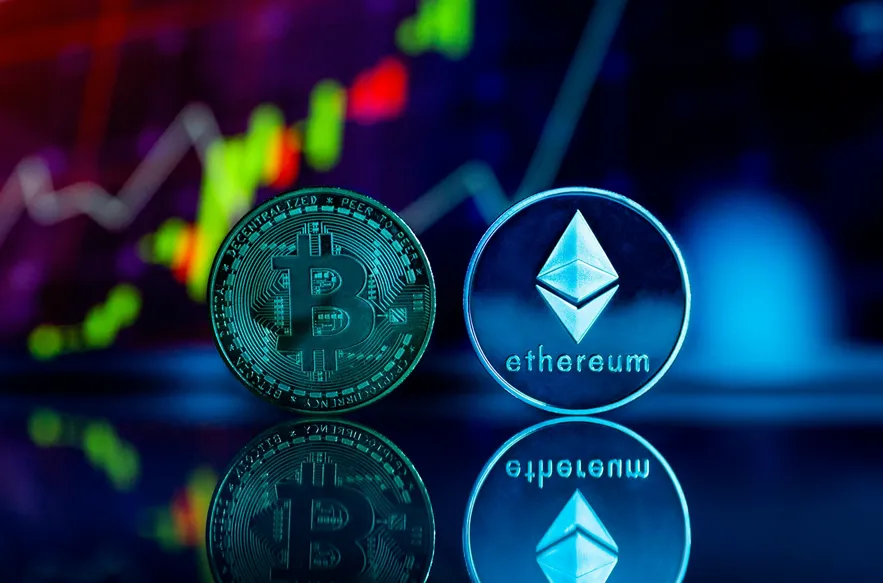
When Ethereum 2.0 was first announced, it was seen as the long-awaited evolution of one of the most influential blockchain networks in the world.
Years later, after the successful transition known as “The Merge,” some wondered whether the hype had faded. But as we move through 2025, it’s increasingly clear that Ethereum 2.0 still matters—perhaps more than ever. Far from being just a technical upgrade, it represents a fundamental shift in how the blockchain ecosystem operates, balancing innovation, sustainability, and scalability in a way that keeps Ethereum at the forefront of digital transformation.
At its core, Ethereum 2.0 marked the transition from a proof-of-work (PoW) system to a proof-of-stake (PoS) model, a change that dramatically reduced the network’s energy consumption. This move came at a crucial time when environmental concerns were becoming central to discussions about blockchain technology. Before the upgrade, Ethereum consumed energy comparable to small countries, a fact that drew criticism from environmentalists and regulators alike. After The Merge, the network’s energy use dropped by over 99%, instantly transforming Ethereum into one of the most sustainable large-scale blockchains in existence. In a world where eco-conscious investing and corporate responsibility are becoming mainstream, that shift still holds major significance.
But the impact of Ethereum 2.0 goes well beyond environmental sustainability. The change to PoS also redefined how network security and participation work. Under the new model, validators replace miners. Instead of using computational power to secure the network, validators lock up ETH as collateral to verify transactions and create new blocks. This system not only democratizes access—since anyone with a modest amount of ETH can participate—but also strengthens security by aligning economic incentives. Attackers would need to acquire vast amounts of ETH, making potential exploits both expensive and self-destructive. This alignment of financial interest and network integrity has proven remarkably effective in keeping the Ethereum ecosystem stable.
Ethereum 2.0 also laid the groundwork for scalability, long considered the platform’s biggest challenge. Before the upgrade, the network could handle only a limited number of transactions per second, leading to high fees and slow confirmation times during peak activity. The roadmap introduced by Ethereum 2.0, including sharding and layer-two integrations, addresses these limitations head-on. Sharding will eventually divide the blockchain into smaller, interconnected segments, allowing multiple transactions to process simultaneously. Combined with rollups and other off-chain solutions, this approach promises to make Ethereum capable of supporting massive global-scale applications without sacrificing decentralization. As Web3 adoption accelerates, this scalability becomes critical for everything from decentralized finance (DeFi) and gaming to real-world asset tokenization.
One of the less discussed but equally important outcomes of Ethereum 2.0 is its effect on economic stability within the ecosystem. The introduction of staking has changed how ETH functions as an asset. Holders can now earn passive rewards by locking their coins in validator nodes, effectively turning ETH into a yield-bearing instrument. This incentivizes long-term holding and reduces volatility, as fewer tokens are available for short-term trading. The resulting supply dynamics—combined with Ethereum’s ongoing token burns from transaction fees—create a deflationary effect that strengthens ETH’s value proposition as both a utility and a store of value.
Ethereum 2.0 also remains essential because of what it represents philosophically. The upgrade was one of the most ambitious technical transitions in blockchain history, carried out on a live network with hundreds of billions of dollars at stake. Its success demonstrated that decentralized governance can manage large-scale change without collapsing under its own complexity. The Ethereum community, known for its diversity and open-source ethos, proved that innovation and consensus are not mutually exclusive. This reinforces Ethereum’s identity as a living project—one that evolves through collaboration rather than central authority.
The effects of Ethereum 2.0 ripple beyond its own network. Its success has influenced the broader blockchain industry, pushing competitors to focus on energy efficiency, governance transparency, and user-centric scalability. Other platforms, from Cardano to Solana, have taken cues from Ethereum’s balance between decentralization and usability. Even traditional financial institutions exploring blockchain solutions now look to Ethereum’s model as a benchmark for sustainable growth. In this sense, Ethereum 2.0 continues to shape not just its own ecosystem but the future of blockchain development as a whole.
Critics often argue that newer blockchains offer faster and cheaper alternatives. While this is true in some cases, it misses the larger picture. Ethereum’s strength lies in its network effect—millions of developers, users, and businesses rely on it daily. Its vast ecosystem of decentralized applications, smart contracts, and stablecoins makes it the most trusted and versatile platform for innovation. Upgrades like Ethereum 2.0 ensure that this infrastructure remains relevant, adaptable, and capable of meeting the demands of a global digital economy. Competing chains may offer specific advantages, but few can match Ethereum’s combination of maturity, decentralization, and developer engagement.
In 2025, Ethereum 2.0 matters not because it was a single event, but because it continues to evolve. The shift to proof-of-stake was just the beginning. Ongoing developments like danksharding, improved rollup performance, and enhanced interoperability promise to push Ethereum’s boundaries even further. It remains the backbone of decentralized finance, the engine of the NFT market, and the testing ground for innovations that will shape the future of the internet itself.
Ethereum 2.0 symbolizes progress—a proof that complex systems can grow responsibly while maintaining their founding values of openness and decentralization. In a rapidly changing digital landscape, that resilience may be the most important feature of all. Far from being just an upgrade, Ethereum 2.0 is a long-term vision in motion, and in 2025, its relevance continues to define the path forward for the entire blockchain world.


